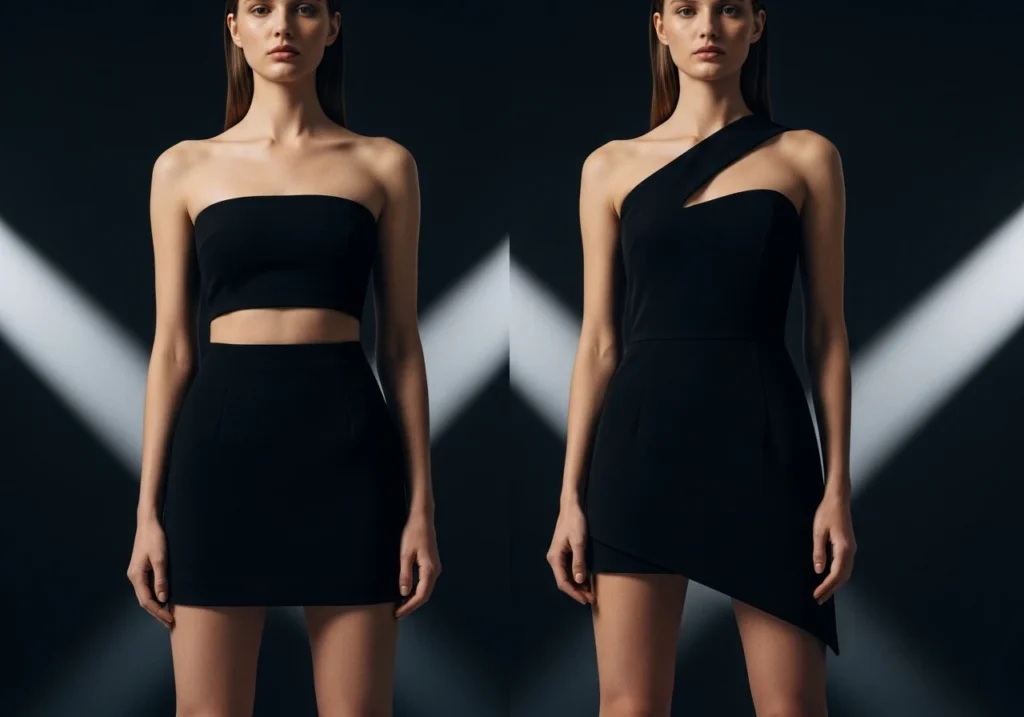
A cut-out and asymmetrical black strapless mini dress operates on a different level from a classic strapless construction. Where a standard black strapless mini dress makes its statement through silhouette and fabric, the cut-out and the asymmetric design make their statement through deliberate interruption. A cut-out black strapless mini dress removes fabric from a specific zone of the body, creating a window of exposed skin that draws the eye with precision and intention. An asymmetrical black strapless mini dress abandons the symmetrical logic that governs most dress construction and replaces it with a diagonal, a direction, a line of visual tension that travels across the body and creates energy where a symmetric garment would create stillness. These are not decorative additions. They are design philosophies, and each one transforms the character of the dress so completely that a woman who understands them dresses differently from one who does not.
This article, put together by NoirMuse, is a complete guide to the cut-out and asymmetrical black strapless mini dress category for any woman who wants to understand both design languages before she commits to one. This guide covers the construction logic and visual character of each approach, compares them directly across the dimensions that matter most, explains how to style both from undergarment strategy to outerwear, provides a body type framework for choosing between them, and directs you to the NoirMuse collection where both are available in constructions built to the specific engineering demands each design requires. If you already know you want a statement black mini dress, this is where you learn which statement is yours.
1. The Cut-Out Black Strapless Mini Dress: Negative Space as Design Statement

The cut-out black strapless mini dress is built on a principle that runs counter to the conventional logic of dressmaking: that removing fabric can be more powerful than adding it. A cut-out is a deliberate absence, a window of exposed skin placed at a specific location on the dress body to create a visual focal point that is neither the neckline nor the hemline but something more surprising and more precise. The cut-out directs the eye to a specific zone of the body with an intentionality that no amount of embellishment or surface decoration can replicate. It is not decoration. It is architecture.
The most common positions for a cut-out in a black dress with cut-out detail are the waist, the sides, the back, and the underbust zone. Each position creates a different visual and structural effect. A waist cut-out is the most universally flattering placement: it draws the eye directly to the narrowest point of the torso, creating the impression of a defined waist regardless of the wearer’s natural proportions. A side cut-out mini dress introduces skin at the lateral plane of the body, creating a visual interruption that adds interest to what would otherwise be an unbroken vertical line from bust to hip. A back cut-out transforms the dress into something unexpected: from the front, it reads as a clean strapless construction; from behind, it reveals a carefully engineered window of skin that creates a sense of dramatic reveal.
The construction of a structured cut-out bodice is significantly more complex than a standard strapless construction. In a conventional strapless dress, the boning runs vertically through the bodice in continuous channels from the top edge to the waist seam. In a cut-out construction, the boning channels must bypass the cut-out opening entirely, which means the structural logic of the bodice has to be redesigned around the negative space rather than through it. The fabric at the edges of the cut-out must be finished with precision: raw or loosely finished edges will stretch, curl, and distort under the tension of wear, compromising the clean geometry of the opening that defines the design. Quality cut-out black strapless mini dresses use bonded or tightly finished edge treatments at the cut-out boundary, often with a narrow facing or binding that maintains the shape of the opening through the full length of an evening.
The undergarment strategy for a cut-out black strapless mini dress is determined entirely by the position of the cut-out. For a waist cut-out, the standard strapless silicone grip tape and boning construction of the bodice handles retention without additional undergarment requirements. For a side cut-out that extends into the underbust zone, an adhesive bra or boob tape applied directly to the skin provides support without appearing in the cut-out opening. For an underbust cut-out, the construction of the dress must incorporate the support function that a traditional bodice provides, which means the boning and cup construction above the cut-out carries the full structural load. Understanding this relationship between cut-out position and undergarment strategy is what allows a woman to wear a cut-out dress that stays up with complete confidence rather than constant anxiety.
In terms of visual effect, the cut-out black strapless mini dress creates a sensuality that is more precise and more considered than the body-forward statement of a bodycon silhouette. Where a bodycon dress reveals the full outline of the body, a cut-out dress reveals a specific and intentionally chosen detail. This specificity is what makes the cut-out design feel more sophisticated than simply wearing a tighter or shorter dress. The woman in a cut-out dress has made a deliberate choice about which part of her body to highlight, and that deliberateness reads as confidence and self-knowledge rather than exposure for its own sake.
For occasion, the cut-out black strapless mini dress belongs to environments where bold dressing is appropriate and appreciated. Night out occasions, birthday celebrations, fashion industry events, and modern cocktail parties with a relaxed dress code are all natural fits. The cut-out design is not a dress for conservative formal occasions or daytime events. It is a dress for evenings with energy, rooms with low lighting, and occasions where the goal is to be remembered.
2. The Asymmetrical Black Strapless Mini Dress: Movement, Direction, and Visual Tension
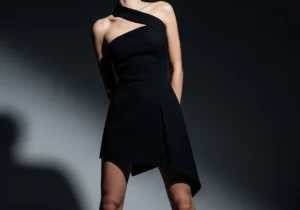
Asymmetry in a black strapless mini dress is the deliberate abandonment of the symmetrical logic that governs most garment construction. In a symmetric dress, the left side mirrors the right. The eye reads the garment as balanced, stable, and resolved. In an asymmetrical black strapless mini dress, one side is intentionally different from the other, creating a diagonal line, an uneven hemline, or a neckline that sits higher on one side than the other. This asymmetry introduces something that a symmetric garment cannot: visual tension. The eye, which is trained to expect symmetry in clothing, encounters the diagonal and follows it. The dress creates movement without the wearer moving. It creates direction without going anywhere. It is one of the most powerful design tools available to a fashion-forward strapless construction.
The most common forms of asymmetry in the asymmetrical black strapless mini dress category are the asymmetric neckline, the diagonal hemline, and the one-shoulder hybrid construction. An asymmetric neckline sits higher on one side of the bust than the other, creating a diagonal line across the chest that redirects the eye from the horizontal expected of a strapless dress to a diagonal that travels across the upper body. A diagonal hemline black dress maintains a symmetrical bodice but allows the skirt to fall longer on one side than the other, creating a sweep of fabric that introduces movement and visual interest below the waist. The one shoulder black mini dress hybrid takes the asymmetry further: one shoulder is covered by a fabric extension or strap, while the other remains bare, creating the strapless silhouette on one side and a covered one on the other simultaneously.
The construction of an asymmetrical black strapless mini dress is among the most technically demanding in the strapless category. Asymmetric boning placement is the central engineering challenge. In a symmetric strapless dress, the boning is placed at corresponding positions on the left and right sides of the bodice, creating balanced tension across the structure. In an asymmetric construction, the diagonal of the neckline or bodice creates uneven tension: one side of the bodice is under greater pull than the other, and the boning must be placed with precision to compensate for this imbalance. If the boning is placed symmetrically in an asymmetric dress, the construction will distort under wear, pulling the neckline out of its intended position and compromising the diagonal line that defines the design.
The visual effect of the asymmetrical black strapless mini dress on the body is one of the most universally elongating in contemporary fashion. The diagonal line created by an asymmetric neckline or hemline travels across the body at an angle that the eye reads as taller and more dynamic than either a horizontal or a vertical line. For petite women, this elongating effect is particularly valuable: the diagonal creates the impression of additional height in a way that a straight hemline or horizontal neckline cannot. For women with a straight or athletic figure, the asymmetric line introduces visual movement and complexity that creates the impression of shape without relying on the body’s natural proportions to supply it.
The asymmetrical black strapless mini dress carries an editorial character that the symmetric constructions in the strapless category do not. It reads as fashion-forward, as considered, as the choice of a woman who understands design rather than simply wearing it. This character makes it appropriate for occasions where dressing well is part of the event’s purpose: fashion industry gatherings, art world openings, editorial shoots, New Year’s Eve celebrations, and any occasion where the dress code values originality over convention. It is not the dress for a conservative wedding or a formal corporate event. It is the dress for the room where the people who notice what you are wearing are the ones whose opinion matters.
3. Cut-Out vs. Asymmetrical: Two Different Design Philosophies
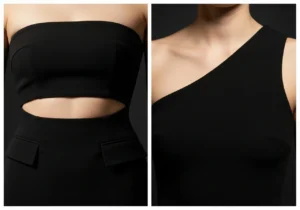
The cut-out and asymmetrical black strapless mini dress category encompasses two genuinely distinct design approaches, and understanding the difference between them is what allows a woman to choose the one that aligns with her body, her occasion, and her instinct for self-expression. NoirMuse approaches this comparison not as a ranking but as a map of two different design philosophies, each internally coherent and each correct in its specific context.
Design Intent and Visual Language
The cut-out black strapless mini dress is a design about negative space. The designer’s tool is absence: a specific zone of fabric is removed, and the skin revealed in that absence becomes the focal point of the garment. The design directs the eye to a particular part of the body with a precision that no amount of embellishment can achieve. It is a dress that says: this specific detail, in this specific location, is what I want you to see.
The asymmetrical black strapless mini dress is a design about line and tension. The designer’s tool is direction: the conventional symmetry of the garment is abandoned in favour of a diagonal that creates movement, energy, and visual complexity. No additional skin is exposed. The design works entirely within the fabric of the dress, redirecting the eye through the geometry of the cut rather than through the revelation of skin. It is a dress that says: the way this garment moves across the body is the statement.
Construction Complexity and Wearability
Both designs are more technically demanding than a standard symmetric strapless construction, but their complexity lies in different areas. The structured cut-out bodice requires the boning and structural logic of the dress to work around the opening, with particular attention to the edge finishing of the cut-out boundary. The fabric integrity at the cut-out edge determines whether the design looks precisely engineered or casually unfinished, and the difference between the two is visible to anyone looking at the dress from across a room.
The asymmetric boning placement required by an asymmetric construction is a different kind of engineering challenge: the structure must compensate for uneven tension across the bodice, placing boning channels with precision at positions that vary between the left and right sides of the garment. A poorly executed asymmetric construction will pull and distort under wear in ways that immediately betray the quality of the construction. A well-executed one holds its diagonal line precisely through the full length of an evening, maintaining the visual tension that defines the design.
Who Each Design Suits Best
The cut-out black strapless mini dress suits women who are confident in their relationship with their body and want to highlight a specific zone of it with deliberate intention. It requires comfort with exposed skin in a targeted location, which is a different and more specific confidence requirement than the general body-consciousness of a bodycon silhouette. The woman who wears a cut-out dress has decided which part of her body she wants to celebrate, and she has dressed accordingly.
The asymmetrical black strapless mini dress suits women who want the visual impact of a fashion-forward design without the skin exposure of a cut-out. The asymmetric construction makes its statement through geometry rather than revelation, which means it is accessible to women who prefer not to expose specific areas of their body but still want a dress that communicates design intelligence and fashion awareness. It is the more versatile design of the two in terms of occasion range, moving from fashion events to bold cocktail occasions with equal conviction.
4. How to Style a Cut-Out or Asymmetrical Black Strapless Mini Dress
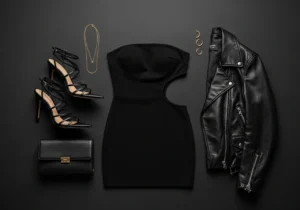
Styling a cut-out and asymmetrical black strapless mini dress requires a specific discipline that differs from the styling logic of a classic strapless construction. Both designs already make a strong visual statement through their construction, which means the role of accessories, shoes, and outerwear is to support that statement rather than to add to it. The governing principle for both is restraint: every element added to the look should have a clear reason for being there, and anything that competes with the primary design detail of the dress should be reconsidered.
Styling the Cut-Out Black Strapless Mini Dress
The undergarment strategy for a cut-out black strapless mini dress must be resolved before any other styling decision is made, because it determines what is and is not visible through the cut-out opening. For a waist cut-out, the standard internal construction of the bodice handles retention, and no additional undergarment is required at the cut-out zone. For a side cut-out that extends into the underbust area, boob tape applied to the skin in an X or V configuration provides support without appearing in the cut-out window. For an underbust cut-out, an adhesive bra positioned above the cut-out opening is the most effective solution. The principle is that whatever undergarment strategy is used, it should be invisible from every angle the dress will be seen from during the evening.
For footwear, the shoes for cut-out mini dress decision should follow the same logic as the jewelry: do not compete with the cut-out detail. Strappy heels in black or nude are the most reliable choice because they are visually lightweight, elongate the leg, and do not introduce a competing design element. A pointed-toe stiletto keeps the eye moving upward toward the cut-out rather than anchoring it at the foot. Block heels provide a more grounded, contemporary alternative that works particularly well with a side cut-out mini dress where the overall aesthetic is more casual-bold than formal-dramatic.
Jewelry for the cut-out black strapless mini dress should be concentrated at a single focal point that does not compete with the cut-out itself. If the cut-out is at the waist, jewelry at the collarbone and ear draws the eye upward and creates a vertical dialogue between the two points of interest. If the cut-out is at the side, a single earring on the cut-out side of the body creates a subtle connection between the two design details without duplicating them. The general rule is: one piece, one location, nothing that competes with the skin visible through the cut-out for the eye’s attention.
Outerwear for the cut-out dress should frame rather than conceal. A blazer worn open over a cut-out black strapless mini dress maintains the visual accessibility of the cut-out detail while providing a transition layer between venues. A leather jacket thrown over the shoulders without putting it on achieves the same effect with more edge. The moment the outerwear closes over the cut-out and conceals it, the design logic of the dress is suspended, which is fine for transit but should be avoided at the destination.
Styling the Asymmetrical Black Strapless Mini Dress
The asymmetrical black strapless mini dress has already introduced the primary visual element of the look through its construction. The diagonal line of the neckline or hemline is the statement, and every styling decision should either reinforce that statement or step back from it entirely. There is no middle ground that works.
For shoes, strappy stilettos are the most effective choice because their vertical line echoes and extends the diagonal energy of the dress without introducing a competing horizontal. For a diagonal hemline black dress, the longer side of the hem creates a natural sweep toward one foot, and a strappy heel on that side is particularly visible and effective. For an asymmetric neckline dress, pointed-toe heels in any finish maintain the sharp, directional character of the design.
For jewelry, the asymmetric neckline creates a specific opportunity: a single earring on the lower side of the neckline, with nothing on the other, is the editorial styling move that the design invites. It echoes the intentional asymmetry of the dress without duplicating it, and it signals a level of styling awareness that reads as completely deliberate. No necklace should be worn with an asymmetric neckline: the diagonal of the neckline already occupies the collarbone zone, and a necklace introduces a competing element in the same visual space. For a diagonal hemline black dress with a straight neckline, a delicate pendant or small earring works well because the collarbone zone is available for jewelry without conflict.
Hair styling for the asymmetrical black strapless mini dress is one of the few areas where the dress imposes a clear preference. Hair worn up or pulled back allows the asymmetric neckline or the bare shoulder of a one shoulder black mini dress hybrid to be fully visible, which is essential for the design to read correctly. Hair worn down and loose over the shoulders obscures the asymmetric detail and reduces the visual impact of the construction to zero. If the hair must be worn down, a side sweep in the direction of the lower neckline edge can work, but it requires careful execution.
5. Body Type Guide: Who Should Wear Cut-Out and Asymmetrical Dresses
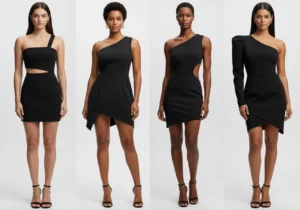
The cut-out and asymmetrical black strapless mini dress category is more body-type-specific than the classic strapless constructions, not because either design is exclusive to certain figures, but because the design details interact with body proportions in ways that are worth understanding before choosing. NoirMuse approaches the cut-out dress for body type and asymmetric dress flattery conversation as a practical guide to making a design detail work for you rather than against you.
For the hourglass figure, the waist cut-out is the most natural and most powerful pairing. The hourglass already carries a defined waist, and a cut-out at that zone exposes and celebrates the narrowest point of the torso in a way that reads as effortlessly confident. The waist cut-out on a natural hourglass does not create the illusion of a waist. It reveals the one that is already there, and the difference between creating an illusion and making a revelation is significant in terms of the confidence the dress projects.
For the athletic or straight figure, both the side cut-out mini dress and the asymmetrical black strapless mini dress are effective tools for creating visual interest and the impression of curve where the body does not naturally supply it. A side cut-out at the hip zone draws the eye to the lateral plane of the body, creating the impression of a hip curve through the interplay of fabric and skin. An asymmetric diagonal line across the body creates a visual complexity that a straight figure carries with particular effectiveness, because the body’s clean lines do not compete with the design detail but instead provide a neutral canvas for it.
For petite women, the asymmetrical black strapless mini dress with a diagonal hemline is one of the most effective elongating choices available. The diagonal line created by the hemline travels across the body at an angle that the eye interprets as additional height. Combined with the short overall length of the mini dress and heels, the diagonal hemline creates a proportion that makes a petite frame appear significantly taller and more dynamic. The waist cut-out also works well for petite figures because it elongates the torso by drawing the eye to the narrowest point, creating the impression of a longer vertical line above the hip.
For women with a fuller bust, the cut-out placement requires careful consideration. A cut-out black strapless mini dress with the opening positioned at the waist or side below the bustline is the safest and most flattering choice, as it creates a focal point that draws the eye away from the bust rather than toward it. A cut-out positioned at the underbust or chest level is more challenging: it draws attention to the bust zone and requires a construction with exceptional internal support to work correctly. The asymmetrical black strapless mini dress without a cut-out is often the better choice for a fuller bust because it creates visual interest through geometry rather than skin exposure, allowing the wearer to make a fashion statement without the undergarment complexity of a cut-out construction.
For women with broader shoulders, the asymmetric neckline is a particularly effective tool. The diagonal line of the neckline redirects the eye downward and inward from the shoulder line, creating a visual path that draws attention toward the center of the body rather than across its widest horizontal. This is the opposite effect of a straight strapless neckline, which amplifies the horizontal of the shoulder line by running parallel to it. An asymmetric neckline on a broad-shouldered frame is one of the most elegant and flattering combinations in the black strapless mini dress category.
6. Shop Cut-Out and Asymmetrical Black Strapless Mini Dresses at NoirMuse
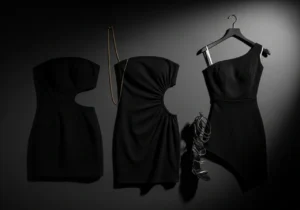
The cut-out and asymmetrical black strapless mini dress category is where the engineering demands of strapless construction meet the creative ambition of fashion-forward design, and it is a combination that most brands do not execute with the depth it requires. A cut-out is easy to add to a dress pattern. A cut-out that maintains its clean geometry through a full evening of wear, whose edges do not stretch or distort, whose boning bypasses the opening with structural precision, is something that requires a different level of construction commitment. NoirMuse approaches both the cut-out and asymmetric designs with that commitment as the baseline.
Every cut-out black strapless mini dress in the NoirMuse collection is built with a structured cut-out bodice in which the boning channels are re-engineered around the cut-out opening rather than simply interrupted by it. The edges of the cut-out are finished with bonded or bound treatments that maintain the clean geometry of the opening under the tension of wear. Silicone grip tape is standard at the internal neckline edge, providing the primary retention mechanism for the bodice above the cut-out. Built-in cups are included in constructions where the cut-out position requires the bodice to carry the full support load without the assistance of an external undergarment. Each product page at blackstraplessminidress.com specifies the position of the cut-out, the construction approach used at the opening, and the undergarment recommendations for that specific style.
Every asymmetrical black strapless mini dress in the NoirMuse range is constructed with asymmetric boning placement that compensates for the uneven tension created by the diagonal design. The boning channels on the left and right sides of the bodice are positioned differently from each other, reflecting the different structural demands of each side of the asymmetric construction. This is not a detail that is visible from the outside of the dress. It is a detail that is felt in the way the dress holds its shape across a full evening, maintaining the precise diagonal line of the neckline or hemline without distortion or migration.
The NoirMuse one shoulder black mini dress hybrid constructions within the asymmetric range address the specific engineering challenge of a dress that is simultaneously strapless on one side and covered on the other. The structural load of the bodice is distributed asymmetrically between the two sides, with the strapless side carrying the grip and boning requirements of a standard strapless construction and the covered side incorporating the additional support provided by the shoulder element. The result is a construction that feels as secure as a conventional strapless dress while looking significantly more directional and fashion-forward.
The full range of cut-out and asymmetrical black strapless mini dresses at NoirMuse is available at blackstraplessminidress.com, organized by design detail and occasion to make the selection process as direct as possible. Every style in the range is accompanied by detailed construction notes, fit guidance, undergarment recommendations where relevant, and styling suggestions written with the same depth you have found in this guide. If you know which design philosophy belongs to your next occasion, the NoirMuse collection is where you find the specific dress that delivers it.
Frequently Asked Questions
What is a cut-out black strapless mini dress?
A cut-out black strapless mini dress is a strapless mini dress with a deliberate opening in the fabric at a specific location on the dress body, most commonly the waist, side, back, or underbust zone. The cut-out creates a window of exposed skin that functions as the primary design detail of the garment. A quality structured cut-out bodice is engineered so that the boning and internal structure of the dress work around the cut-out opening, maintaining the clean geometry of the opening and the structural integrity of the bodice across a full evening of wear.
How do I wear a cut-out dress without showing my bra?
The undergarment strategy for a cut-out black strapless mini dress depends on the position of the cut-out. For a waist cut-out, the internal construction of the bodice handles support and no additional undergarment is required at the cut-out zone. For a side or underbust cut-out, boob tape applied to the skin in a configuration that provides lift without appearing in the cut-out window is the most reliable solution. An adhesive bra positioned above the cut-out opening works well for underbust designs. The principle is that the undergarment must be completely invisible from every angle the dress is seen from during the evening.
Is an asymmetrical black mini dress appropriate for a cocktail party?
Yes, in most cocktail party contexts. An asymmetrical black strapless mini dress communicates formality through design intelligence rather than through conservative construction, which makes it appropriate for modern cocktail occasions with a smart or fashion-forward dress code. For very conservative formal events, a symmetric construction may be the safer choice, but for the majority of cocktail party environments, the asymmetric design reads as dressed and deliberate rather than inappropriately casual.
Which body type suits a waist cut-out dress best?
The waist cut-out is most naturally flattering on the hourglass figure, where it exposes and celebrates the natural waist definition that is already present. It is also highly effective for petite figures, where it elongates the torso by drawing the eye to the narrowest point. For straight or athletic figures, the waist cut-out creates the impression of a defined waist through the interplay of fabric and exposed skin, functioning as a design tool that adds the waist definition the natural proportions do not provide.
How does asymmetric boning work in a strapless dress?
In a standard strapless dress, boning is placed symmetrically on the left and right sides of the bodice at corresponding positions. In an asymmetrical black strapless mini dress, the diagonal of the neckline or bodice creates uneven tension: one side of the dress is under greater structural load than the other. Asymmetric boning placement addresses this by positioning the boning channels differently on each side of the bodice, with additional support placed at the areas of greatest tension on the higher neckline side. This compensates for the imbalance created by the diagonal design and allows the dress to hold its shape precisely through a full evening of wear without distortion.
Conclusion: The Detail Is the Dress
The cut-out and asymmetrical black strapless mini dress category is where the classic strapless silhouette becomes something more specific, more intentional, and more memorable. A cut-out black strapless mini dress chooses a precise zone of the body to highlight and builds the entire design around that choice. An asymmetrical black strapless mini dress abandons symmetry in favour of a diagonal that creates movement, tension, and a fashion intelligence that the classic construction cannot replicate. Both are correct. Both are powerful. The difference between them is a difference in design philosophy, and the right philosophy for any given woman on any given evening is the one that aligns with how she wants to feel and what she wants to communicate when she walks into the room.
NoirMuse builds both with the construction commitment that each design demands. A cut-out without precise edge finishing is a design detail that deteriorates across an evening. An asymmetric dress without asymmetric boning placement is a construction that distorts rather than holds. The NoirMuse collection of cut-out and asymmetrical black strapless mini dresses is built to avoid both of these failures, with every design decision made in service of the dress performing exactly as it looks on the product page throughout the full length of the occasion it is designed for.
If this guide has helped you identify which design philosophy belongs to your next occasion, the next step is finding the specific dress that delivers it. Visit blackstraplessminidress.com and explore the full NoirMuse range of cut-out and asymmetrical black strapless mini dresses, each one built to the construction standards described in this article and accompanied by the fit guidance and styling notes needed to wear it with complete confidence. The design detail that defines your evening is already there. Your occasion is coming. Go find it.